Skip to content

Dealing with damp, condensation, and mould

This page explains what you can to prevent or deal with damp, mould, and condensation in your home, as well what we’ll do if you need our help.

Jump to a section on this page

Dealing with damp, condensation, and mould - our commitment to you:

Damp, condensation, and mould can affect quality of life and could cause serious health problems- which is why it’s important to know some of the common causes/signs of issues and how to resolve them.

There are many things you (as our tenant) and we (as your landlord) can do to tackle issues related to damp, condensation, and mould.

Our short video brings together details on things you can do to prevent and/or deal with issues, along with how to tell us if you’re concerned. You can also scroll down to learn more.

What are the different types of damp?

All homes are at risk of damp and mould, especially during the winter months. Excessive moisture around the home can cause these problems.

By understanding the different types of damp and their possible causes, you can work out what action to take.

An example of condensation on a window. There are many small droplets of water sitting on the glass, reducing the visibility through the window.

Condensation:

Condensation happens in most homes. It appears when warm, moist air inside the house meets a cold surface like a window or wall.

Everyday activities such as cooking, bathing and drying clothes indoors create moisture. Over time, this can lead to black mould on walls, wallpaper, paint or plaster.

Condensation is most common in colder months. You’ll usually see it in room corners, north-facing walls, windows, and places with poor airflow, such as behind wardrobes or beds.

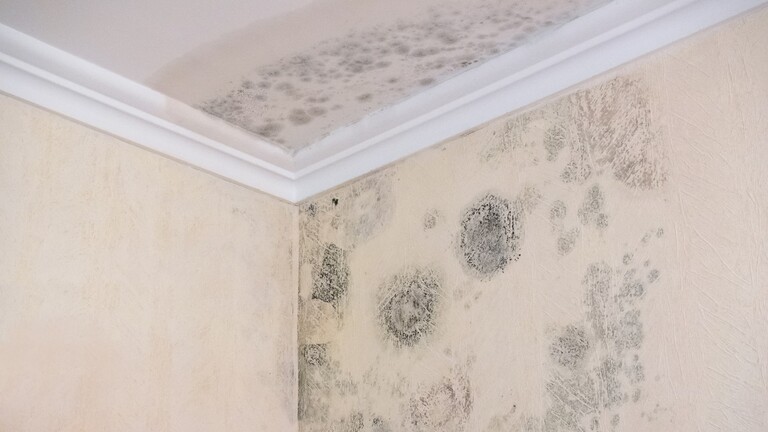
An example of penetrating damp inside a home. Black mould is visible in the corner of the room, close to the ceiling.

Penetrating damp:

Penetrating damp is caused by a problem outside the home – such as cracked brickwork, broken render, gaps in the mortar, or missing roof tiles.

These faults let rainwater get into the building. It often shows up as a damp, wet‑looking patch on walls after rain. Black mould may appear in the affected area.

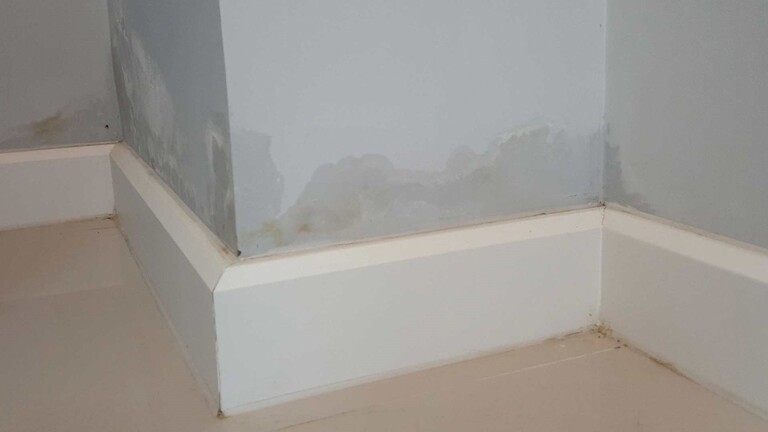
An example of rising damp on an internal wall. There is a dark or wet patch above to the skirting board.

Rising damp (internal or external):

Rising damp happens when moisture from the ground travels up through the walls.

It occurs when the damp proof course (DPC) is damaged, bridged, or missing. A DPC is a waterproof layer built into a wall just above ground level to stop moisture rising.

Rising damp only affects basements and ground‑floor rooms. It usually rises no higher than 24 inches and often leaves a ‘tidemark’ of white salts. If not treated, it can cause plaster to crumble and wallpaper to lift.

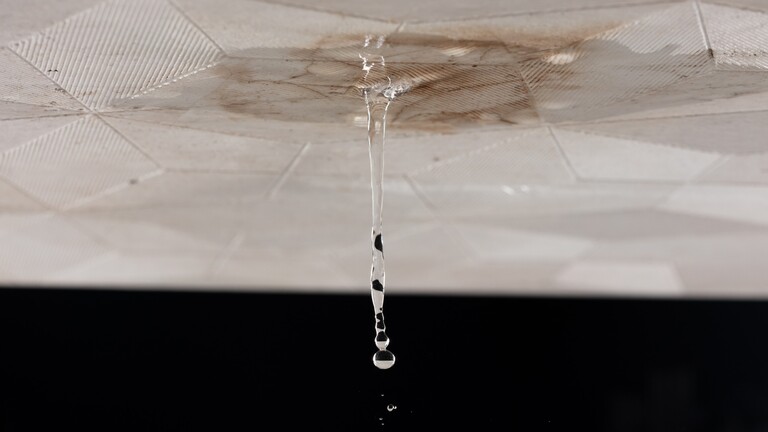
Water leaking from a ceiling.

Water leaks:

Leaks from water or waste pipes – especially in kitchens and bathrooms – are fairly common.

Leaks can damage walls, ceilings and floors, inside or outside the home. The area will look and feel damp, regardless of the weather.

Checking pipework, taps, seals around baths and sinks, and external pipes such as guttering will usually help find the source of the leak.

How does damp and condensation cause mould?

Mould spores are invisible to the human eye and are always present in the atmosphere both inside and outside homes. They only become noticeable when they land on a damp surface, where they can grow and then multiply.

This is why – in order to be able to deal with black mould growth – it’s important to understand the causes of and ways to deal with dampness and condensation in your home.

What can I do to reduce condensation and prevent damp?

Three factors which affect the amount of condensation in a home are:

Follow our six-step plan for reducing condensation and preventing damp:

Moisture comes from a number of ordinary activities in the home.

Here are a few ways you can reduce it:

Wipe the windows and window sills of your home (kitchen roll works best) every morning to remove condensation.

You can ventilate (air) a room without causing it to become too cold by opening a window slightly or by using the trickle vent found on new UPVC windows. Some windows can be set in the open position while still being locked.

Opening windows allows moisture to escape and lets in dry air, which is also cheaper to heat.

To keep your home ventilated:

By opening your windows, you might worry that you’re losing heat. But what you’re actually doing is letting warm moisture-laden air escape and allowing cool, dry air into your home. Dry cool air is actually cheaper to heat than warm, moist air.

In cold weather, the best way to keep rooms warm and avoid condensation is to keep low background heat on all day rather than having short burst of high heat. Use the heating controls on your radiators as well as the thermostat and timer to control your heating and manage costs.

You can help reduce draughts in your home by following a few quick steps:

*Be mindful when using draught excluders on internal doors. Blocking airflow between rooms can reduce ventilation and affect how well extractor fans work, especially in kitchens and bathrooms.

Only use draught excluders on internal doors if you really need to, and make sure there’s still enough airflow to keep your home fresh and free from damp.

Black mould can grow on walls, ceilings, furnishings and even on clothes and toys.

By dealing with the causes of condensation (using the steps listed above), you’ll greatly reduce the chances of having black mould in your home.

However, if you spot mould growing on a surface, it’s important to take early action as it can spread quickly. When mould covers a small area, it’s generally easy to remove it yourself. You can use various household products, or a combination of them, like:

Remember, dealing with condensation and preventing mould in your home can be an easy process. But if you’re worried about a more serious problem, please get in touch with us by calling our repairs line on 01204 328000.

Things to avoid:

Don’t ignore issues with damp, condensation or mould, as they could cause health problems and damage your home.

Don’t just paint over areas affected by mould, as this won’t solve the problem and could make it worse.

Don’t use chlorine bleach to clean areas affected by mould, as this is unlikely to remove the root cause of the problem and could be dangerous to your health.

Don’t block any vents or air vents in your home, as this will reduce ventilation and air quality.

Please speak to us if you're concerned:

If you’re concerned about issues relating to condensation, damp, and/or mould in your home, it’s best to call us on 01204 328000.

You can also tap here to see all of our main contact details.

For significant hazards (standard investigations):

We'll clean mould and remove any hazards within 10 days.

For emergency hazards (emergency investigations):

We'll clean mould and remove any hazards within 24 hours.

What happens when you tell us about damp and mould in your home:

Scroll down or watch our short video for a summary of what happens when you report damp and mould-related issues to us.

1. Tell us about it as soon as you can:

If you're concerned about issues relating to condensation, damp, and/or mould in your home, please tell us as soon as you can.

2. We'll ask you about the issues you're experiencing:

Someone from our Contact Centre will ask you some questions to assess the situation right away. For example, we might ask whether there's a wet patch (with a yellow or brown tinge), if the damp or mould has appeared next to a radiator or pipework, which room is above, or on the other side of the wall, and whether it's on an external wall.

3. Our technical team will arrange an initial visit:

After they've reviewed your report, someone from our technical team will be in touch to arrange what's known as an initial triage visit. This is where one of our property maintenance operatives will take photos of any damp and mould, treat it where possible, and identify any underlying causes.

4. A senior colleague will review the photos from the initial visit:

Once we've completed an initial triage visit, one of our senior building surveyors will review the photos that were taken to determine what should happen next. This could involve one of our damp inspectors or building surveyors carrying out a follow-up damp inspection at your home.

5. We'll arrange a follow-up inspection where appropriate:

During the follow-up inspection, we'll use specialised tools to understand the causes of issues and find solutions. We'll tailor our solutions based on how your home has been affected - for example, we might arrange for a further mould treatment, ventilation systems to be installed/serviced, or put other specialist solutions in place for your home.

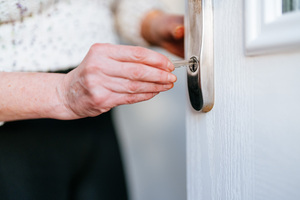
Please allow us access into your home:

It's really important that you allow us access to your property for any scheduled appointments. This will allow us to find and address any damp and mould-related issues as quickly as possible.

Useful downloads:

If you’d like to keep our guidance on dealing with damp, mould, and condensation handy, you can download our ‘Keeping a healthy home’ PDF leaflet by tapping below.

An ‘Easy Read’ version of our damp and mould guidance is also available below.

You may also be interested in:

All pages in this section: